
Cable Lay Vessels and Their Role in Subsea Infrastructure:
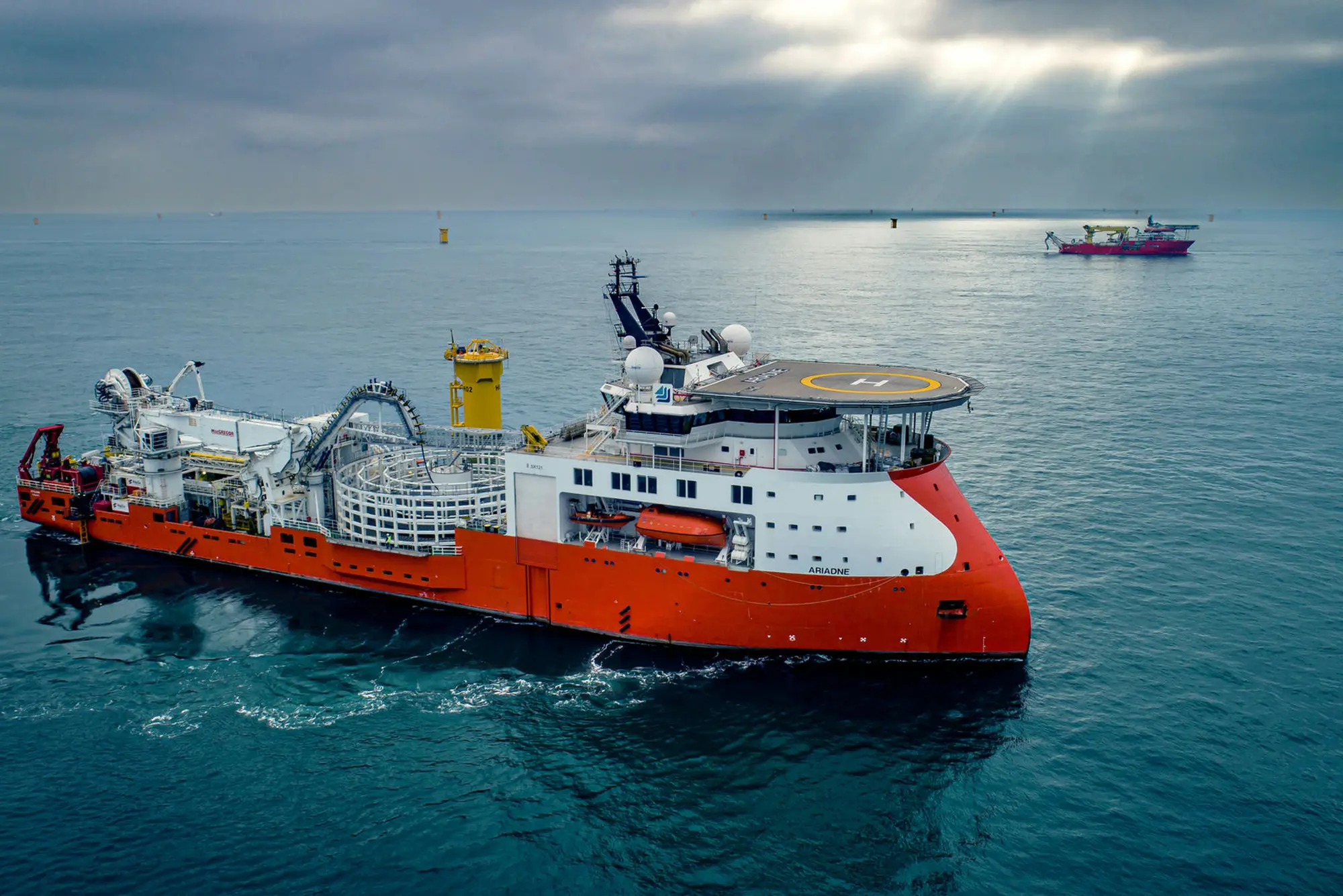
A Cable Lay Vessel (CLV) is a specialized offshore ship designed to install submarine cables on the seabed. These cables serve various purposes, including telecommunications, power transmission (such as offshore wind farms), and oil & gas operations (like subsea umbilicals and pipeline connections). The main role of a CLV is to transport, lay, and sometimes bury these cables safely on the ocean floor, often in deep or challenging conditions.
Key Features of Cable Lay Vessels:
Cable Storage and Handling:
CLVs have large cable reels or tanks to store long lengths of cable, sometimes carrying thousands of tons depending on the project. Cable tensioners and turning devices ensure smooth deployment without overstressing the cable.
Cable Lay System:
The cable lay system allows controlled deployment to prevent damage. Many vessels use ploughs or trenching machines to bury cables beneath the seabed for protection against anchors, fishing, or other external forces.
Dynamic Positioning (DP):
Modern CLVs are equipped with Dynamic Positioning systems to maintain precise positions without anchors. This is crucial for deepwater cable laying or uneven seabeds. DP2 vessels have additional redundancies for safety and reliability.
Types of Cables Laid:
Telecommunications Cables: For global internet and telephone networks.
Power Cables: To transmit electricity from offshore wind farms or platforms.
Subsea Umbilicals and Pipeline Cables: Provide power, control, and communication for offshore oil and gas installations.
Deck Space and Equipment:
CLVs have large deck areas to accommodate cable reels, machinery, cranes, and winches. Cable protection devices, like ploughs, help bury cables in high-traffic areas or fishing zones.
Multifunctionality:
Some CLVs can perform ROV (Remotely Operated Vehicle) operations to inspect cable placement and troubleshoot issues during installation.
Accommodations:
CLVs provide living spaces for crew and engineers, including cabins, mess rooms, and workspaces, suitable for extended offshore operations.
Use in Renewable Energy:
CLVs are critical for offshore wind projects, laying cables that connect turbines to the grid. With the growth of renewable energy, the demand for these vessels is increasing.
Size and Capacity:
Cable lay vessels range from smaller ships for shallow waters to large heavy-duty vessels for deepwater projects. Capacity depends on the project scale and cable type.
In summary, Cable Lay Vessels are specialized offshore ships that play a key role in laying submarine cables for telecommunications, power transmission, and oil & gas operations. Equipped with advanced cable handling systems, dynamic positioning, and other specialized tools, CLVs ensure efficient and safe operations in deepwater and challenging offshore environments. They are essential for building global communication networks, renewable energy infrastructure, and subsea oil and gas projects.