
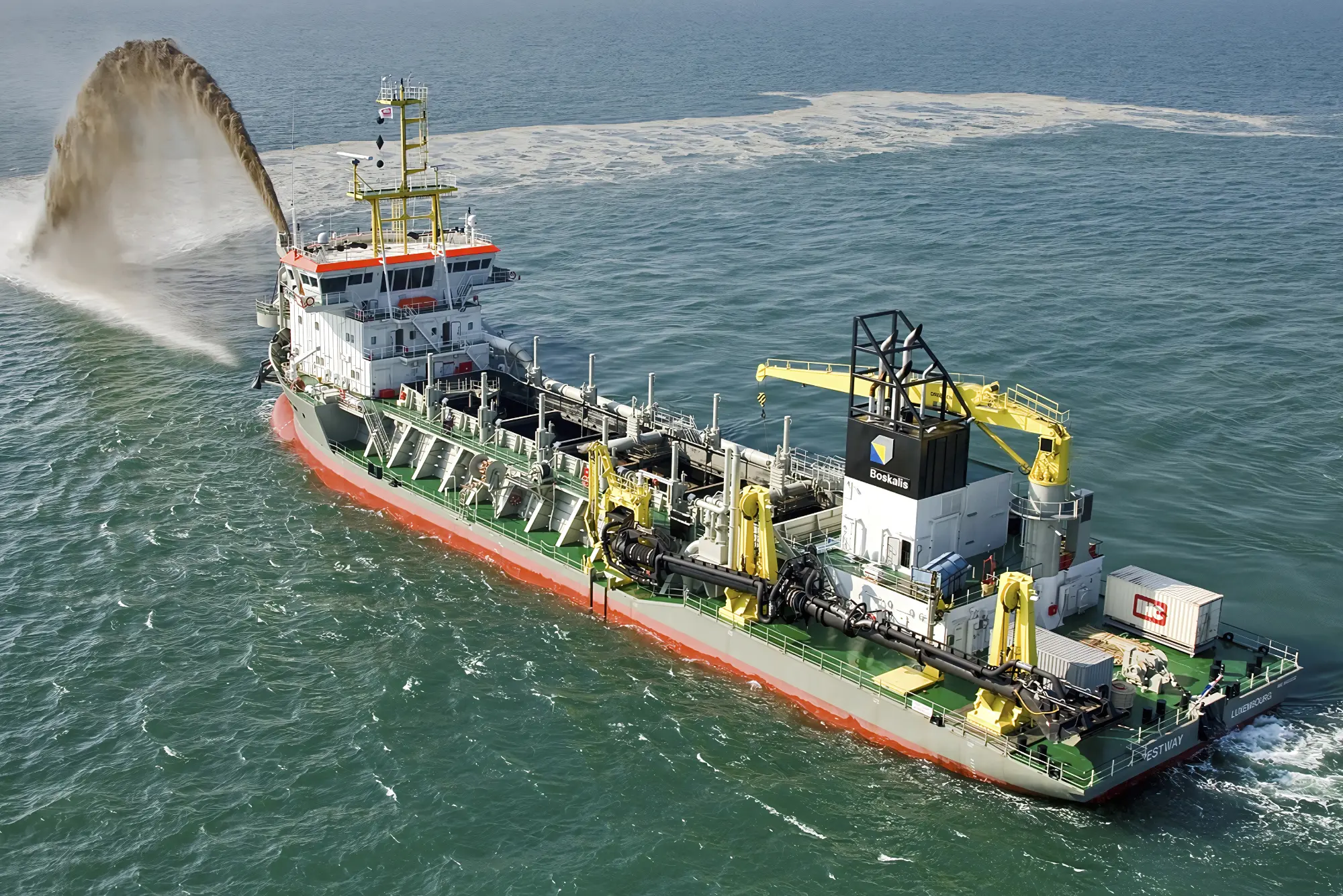
Dredger Vessels and Their Importance in Waterways:
A dredger vessel is a type of ship or floating platform designed to remove sediment, sand, silt, and other materials from the bottom of rivers, lakes, harbors, and seas. This process, called dredging, helps keep navigation channels open, improves access to waterways, prevents flooding, and provides materials that can be reused in construction or land reclamation.
Key Features of Dredger Vessels:
Dredging Equipment:
Dredgers are fitted with special tools to remove materials from the seabed or riverbed. The equipment depends on the dredger type and may include:
Cutterheads: Rotating blades that cut into the seabed.
Dragheads: Tools used to collect sediment from the bottom.
Suction Pipes: Large pipes that pump sediment to the surface or onto barges.
Types of Dredgers:
Cutter Suction Dredgers (CSD): Use rotating cutters to break up hard seabed material, which is then sucked through pipes and transported. Often used for port maintenance and deepening channels.
Trailing Suction Hopper Dredgers (TSHD): Have trailing suction pipes that gather sediment and store it in onboard hoppers before disposing of or transporting it.
Grab Dredgers: Use mechanical grabs or buckets to lift sediment, often in shallow waters or harbors.
Bucket Dredgers: Use chains of buckets to scoop up material, mostly in shallow areas.
Functions of Dredgers:
Channel Maintenance: Clear sediment to keep shipping routes safe.
Port and Harbor Construction: Deepen or create harbors for larger ships.
Land Reclamation: Use dredged material to create new land for cities or industries.
Flood Control: Deepen riverbeds to improve water flow and reduce flood risks.
Mining: Extract valuable resources such as sand, gravel, or minerals.
Dredging Process:
Dredging involves lowering equipment to the seabed to loosen or suck up material. The dredged sediment is then either discharged back into the sea in designated areas or transported for reuse in projects.
Environmental Considerations:
Since dredging can affect ecosystems, operations are regulated to reduce risks such as water turbidity, habitat loss, or pollution. Careful planning ensures minimal environmental damage.
Size and Capacity:
Dredgers range from small, portable units used in shallow waters to very large vessels designed for deepwater channels or even offshore mining.
In conclusion, dredger vessels are essential for maintaining waterways, building ports, reclaiming land, and even extracting resources. They play a key role in maritime infrastructure and environmental management worldwide.