
This introduction explains what you’ll learn about ship displacement. It’s crucial for safe and efficient sailing or ship design. You’ll discover how displacement relates to volume, weight, and buoyancy.
The article is for those in the maritime field in the UK. It offers practical guidance on ship displacement. You’ll find the technical details you need without unnecessary theory.
The structure is easy to follow. Ten sections cover key terms, measurement methods, and hydrostatic principles. You’ll also learn about factors that change displacement and its impact on stability and performance.
Understanding displacement is vital for vessel safety and design. It affects operational economics too. Accurate figures are needed for load line and tonnage compliance and surveys by societies like Lloyd’s Register and DNV.
Units and conventions follow British practice. You’ll see metric units like tonnes and cubic metres. British English spelling is used. Historical imperial measures are explained when relevant.
When you study how a vessel sits in the water, clear terms help you make sound decisions about loading, routing and safety. This section defines key concepts, explains why ship displacement matters for performance and shows how buoyancy and displaced water volume connect to operational limits.
Ship displacement is the weight of the water displaced by the vessel’s submerged volume; at equilibrium this equals the vessel’s total mass. You will see this expressed in tonnes for mass and cubic metres for ship volume when discussing hull immersion.
Distinct measures include lightship weight, loaded displacement, deadweight (DWT) and displacement tonnage. Lightship reflects the bare hull with machinery and permanent fittings. Loaded displacement adds cargo, fuel, stores and ballast. Deadweight is the difference between loaded displacement and lightship weight and represents cargo-carrying capacity.
Related naval architecture terms you should know are draft (vertical distance from waterline to keel), waterplane area, centre of gravity (G), centre of buoyancy (B) and metacentre (M). These affect trimming, stability and the distribution of displaced water.
The displacement of ship directly determines draft and thus affects harbour access and under-keel clearance. When displacement rises, draft increases and some ports or channels may become off limits.
Weight also influences resistance through the water. Heavier displacement generally raises resistance at a given speed, which increases power demand and fuel consumption. You must consider displacement when planning voyages to balance speed, fuel costs and schedule.
Operational decisions such as cargo allocation, ballast management and compliance with load line limits rely on accurate awareness of ship displacement. Proper control of displacement helps preserve stability margins and reduces risk when operating in confined waters.
At equilibrium the buoyant force equals the vessel’s weight. The displaced water volume multiplied by the water density gives displacement mass. You can think of buoyancy as the upward push created by the submerged portion of the hull.
Water density varies with salinity and temperature. Typical sea water is about 1025 kg/m3, while fresh water is near 1000 kg/m3. Moving from the North Sea into a river estuary changes density and thus the submerged volume needed for the same displacement.
Practical consequences arise when you transit different waters. A change in density alters draft for the same load. You must account for this when determining cargo limits and under-keel clearance for safe passage.
| Term | Meaning | Units |
|---|---|---|
| Ship displacement | Weight of water displaced by submerged hull; equals vessel mass at equilibrium | Tonnes |
| Lightship weight | Mass of hull, structure and permanent equipment without cargo or consumables | Tonnes |
| Loaded displacement | Lightship plus cargo, fuel, stores and ballast | Tonnes |
| Deadweight (DWT) | Carrying capacity: loaded displacement minus lightship weight | Tonnes |
| Ship volume | Submerged volume of hull used to compute displaced mass via water density | Cubic metres (m³) |
| Draft | Vertical distance from waterline to keel; controls clearance and docking limits | Metres |
| Centre of buoyancy (B) | Centroid of the displaced volume; position changes with trim and immersion | Metres from reference |
| Centre of gravity (G) | Point where the ship’s weight acts; critical for stability | Metres from reference |
| Metacentre (M) | Intersection of buoyant force lines for small angles; used to assess initial stability | Metres from keel or datum |
There are several ways to measure ship displacement. Each method is suited for different stages, from design to daily operations. Below, we’ll look at the main approaches, how volume relates to mass, and the tools used at sea and on land.
Methods for calculating displacement: principal approaches
The hydrostatic method uses a vessel’s lines plan and hydrostatic curves. It gives displacement for a given draft from pre-calculated tables. This method is common in shipyards and class surveys for precise values.
The mass-balance method adds the actual weights on board. It totals lightship weight, cargo, fuel, stores, ballast, and crew to compute displacement. Ship operators use this for load planning and compliance checks.
The buoyancy or volume approach derives displaced mass from submerged volume. It calculates underwater hull volume and multiplies by water density to obtain ship displacement. This is useful when you have accurate hull geometry and want a physics-based value.
Using ship volume and density to derive displacement
Submerged volume depends on hull form and the block coefficient. The block coefficient gives a compact way to estimate how the hull fills its enclosing rectangular prism. You multiply submerged volume by water density to get displacement in kilograms, then divide by 1,000 to convert to tonnes.
Numerical form: displacement (tonnes) = submerged volume (m3) × water density (kg/m3) / 1000. You must correct for trim and sinkage because submerged volume changes with pitch and heel. Hydrostatic tables provide precise submerged volumes for those conditions.
Tools and instruments used in modern measurement
Onboard load computers and stability software from suppliers like ABS Nautical Systems and DNV provide near-real-time ship displacement and stability data. These systems combine weights, tank soundings, and draft readings to output accurate results for your crew.
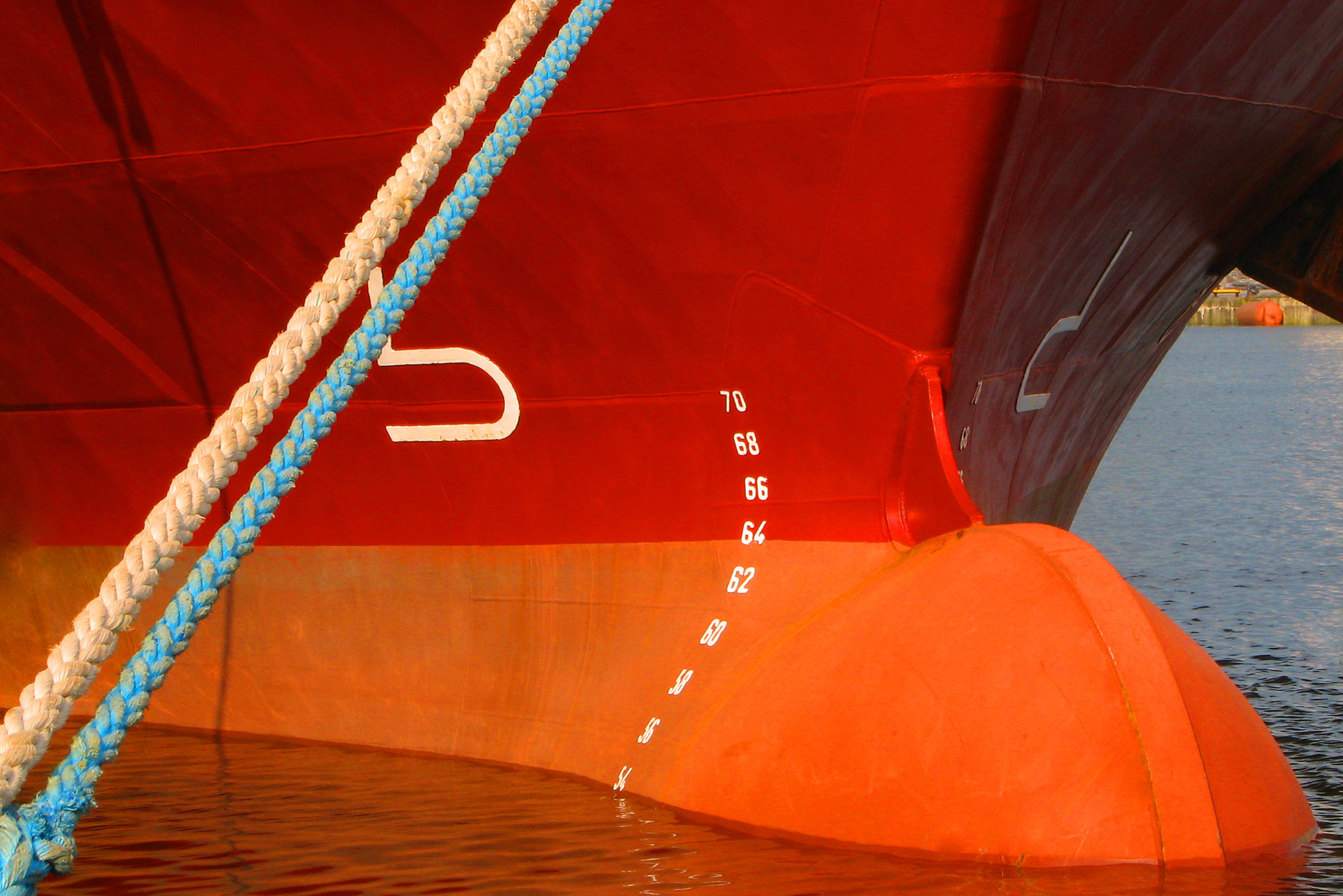
Drafts taken from draught marks remain a fundamental measurement. You use correction tables to adjust for trim, water density, and wave action. Inclinometers, draught gauging during inclining experiments, and tank soundings help verify the numbers during surveys.
Shipyards and surveyors use laser scanning and 3D modelling to derive hull form and ship volume precisely. Classification societies require verified methods and defined tolerances during official measurements to ensure accuracy and repeatability.
| Approach | Primary data | Typical use | Key advantage | Limitations |
|---|---|---|---|---|
| Hydrostatic method | Lines plan, hydrostatic tables | Design checks, class surveys | High precision for given draft | Requires approved hydrostatic data |
| Mass-balance method | Lightship weight, cargo, fuel, stores | Daily loading, voyage planning | Direct, operationally practical | Depends on accurate weight inventories |
| Buoyancy/volume approach | Submerged hull geometry, water density | Hydrostatic estimation, design validation | Physics-based, links ship volume to mass | Sensitive to hull form accuracy and trim |
| Survey and scanning | Laser scans, 3D models, inclining test | Shipyard measurement, damage assessment | Very detailed hull form and volume data | Resource intensive and needs expert analysis |
Hydrostatic ideas control how ships behave at rest and when their load changes slightly. These ideas link buoyancy, pressure, and the shape of the hull underwater. This link helps us understand how a ship’s volume and shape affect its ability to float and how it responds to changes in load.
Archimedes showed that the upward force on a body in a fluid is equal to the weight of the fluid it displaces. For a ship at rest in calm water, the buoyancy force equals its weight. This means the ship’s displacement is the same as its weight. We can use this to check the ship’s stability and draft when we add cargo, fuel, or ballast.
However, real-world operations introduce dynamic effects. These include squat and wave-induced variations. These effects can shift the effective centre of buoyancy and temporarily change the ship’s displacement readings.
Hydrostatic pressure increases with depth. This means the underwater hull experiences a varied pressure field. By integrating this pressure over the submerged surface, we find the buoyant force and the centre of buoyancy.
When a vessel heels or trims, the shape of the submerged region changes. This alters the volume of the ship below the waterline and moves the centre of buoyancy. Local features like bulbs, bilges, or chine lines also affect the pressure distribution and stability calculations.
Fuller hulls have a higher block coefficient, resulting in a larger displaced volume for a given length and beam. This gives them more initial stability and different resistance traits compared to finer forms. These hydrostatic differences affect the metacentric height and righting behaviour at small angles.
Finer hulls, on the other hand, reduce resistance at speed but may have lower initial transverse stability. Designers use displacement versus draft and waterplane area curves to predict how changes in loading affect draft, trim, and the relation between ship displacement and volume across different operating conditions.
Understanding what is displacement in the ship? helps manage loads, stability, and performance. Here are common causes of displacement changes and how to keep your vessel safe and efficient.
Loading or discharging cargo directly changes the ship’s displacement by adding or removing weight. Your cargo planning and distribution must control weight placement to avoid issues.
Ballast tanks help adjust trim and stability when cargo moves or is unevenly loaded. A clear ballast management plan guides when to pump, how much, and which tanks to use.
Fuel, lubricants, freshwater, and provisions reduce ship displacement as they are used. Gradual weight changes can affect trim and the vessel’s centre of gravity during long passages.
Plan bunker consumption and perform frequent stability checks. Proper fuel management helps maintain trim, efficiency, and predictable changes in ship volume immersion.
Water ingress from damage or leaks increases displacement and can reduce freeboard or compromise stability. Emergency response and damage control procedures are vital to limit flooding and restore safe conditions.
Biofouling increases effective weight and hull roughness, raising resistance and fuel use. Regular hull cleaning and anti-fouling coatings reduce this impact on ship displacement.
Structural modifications, such as retrofits or added equipment, permanently change lightship weight. Record all changes in the ship’s documentation and update stability information and hydrostatic data to reflect altered ship volume and ship displacement.
Your vessel’s stability is more than just its shape and load. Changes in ship displacement affect key hydrostatic quantities. These changes control initial and overall stability.
Let’s explore how displacement and ship volume impact metacentric height, righting moment, and loading decisions.
Metacentric height (GM) is influenced by geometry and the relation BM = I/V. As displacement increases, V grows and BM decreases for a fixed waterplane inertia. This can lower GM if G doesn’t move down as fast as BM falls.
Weight distribution changes affect G and GM, separate from V. The righting moment is the displacement times the righting arm GZ. A bigger ship displacement means a bigger righting moment at any GZ. But, a smaller GM can make the vessel more tender at small angles of heel.
GZ curves show righting arm against heel angle. They change with displacement. The magnitude of righting moments shifts because displacement multiplies GZ. Use cross-curves of stability to compare GZ at different drafts and trims.
Stability criteria from IMO and classification societies set minimum GZ values. You must check stability data for each draft and trim case. This ensures compliance across likely displacements.
When loading, check that displacement and weight distribution keep GM safe. Consider fuel and water burn-off, shifting cargo, and free surface effects. These factors reduce stability and can erode safety margins during a voyage.
Keep an updated stability book and follow the vessel’s loading manual. Training officers on stability management helps respond to changes in ship volume, trim, and displacement while underway.
| Parameter | Effect of Increased Displacement | Operational Action |
|---|---|---|
| BM (I/V) | Decreases if I constant, since V rises | Review waterplane inertia or alter distribution to restore BM |
| GM | May decrease unless G lowers proportionally | Manage vertical centre of gravity by stowing heavy items low |
| Righting moment (displacement × GZ) | Increases in magnitude, but shape depends on GZ | Check GZ curves for all drafts; ensure criteria met |
| GZ curves | Same GZ shape; moments scale with displacement | Use hydrostatic tables to generate cross-curves for different drafts |
| Free surface effect | Reduces effective GM irrespective of displacement | Limit tank ullage, use baffles and monitor liquid movement |
| Consumable burn-off | Gradual reduction in displacement; G may shift | Plan ballast adjustments and recheck stability after significant burn-off |
Your ship’s displacement affects how it moves through water. Small changes in displacement alter the ship’s immersed hull area. This changes speed resistance and the power needed to stay on schedule.
Higher ship displacement means more wetted surface and wave-making. This increases frictional and wave-making resistance. So, your engines need more power to keep the same speed.
Frictional resistance grows with immersed area and surface roughness. Wave-making depends on hull speed and form. Residual resistance, covering eddies and form effects, is less predictable.
When planning schedules, use conservative power margins for heavier loads and bad weather. Weather routing and fuel planning should consider the change in speed resistance due to different loads.
Trim and sinkage affect propeller immersion and flow. Small stern trim can reduce resistance, improving efficiency and speed. But, too much trim or sinkage can harm manoeuvrability and risk cavitation.
Watch propeller thrust and wake patterns with loading changes. Adjust ballast and trim tabs to keep the hull-propeller interaction optimal. This preserves efficiency and reduces cavitation risk.
Greater displacement means more fuel burn at a given speed. Engines must work harder to overcome higher resistance. Managing load, optimising trim, and slower steaming can cut consumption and costs.
Slower steaming often saves fuel when displacement is high. Your operational choices impact lifecycle costs. Heavier displacement speeds up hull fouling and wear, increasing maintenance, fuel use, and emissions.
Balance charter party demands, cargo handling, and voyage profiling to control costs. This helps manage expenses related to ship volume and displacement.
Keeping accurate records of ship displacement is crucial. Regulators, port state control, and classification societies rely on these figures. Displacement affects loading, draught limits, and statutory checks in UK waters.
Understanding load lines and freeboard is key. The International Convention on Load Lines links loading conditions to seasonal zones and vessel displacement. Exceeding load lines is illegal, posing high risks to stability and safety.
Tonnage and displacement are different. Gross and net tonnage measure ship volume for regulatory and fee purposes. Displacement, however, measures the actual weight of water displaced. Both figures impact compliance and port charges.
Your vessel must carry approved stability documents. These must meet IMO and SOLAS standards. Classification societies like Lloyd’s Register and DNV require inclining test results and a stability booklet that reflects current conditions.
Statutory stability criteria are vital for safety decisions. MARPOL and SOLAS require verified stability data. This ensures safe operation and compliance.
Operational limits are based on displacement and stability. Maximum safe draught and cargo plans are set using these numbers. Adhering to these limits protects the ship, cargo, and crew.
Knowing how added water affects the vessel is critical. Damage stability assessments use displacement values to predict survivability. Familiarity with ballast systems and damage control procedures is essential for emergency response.
Drills, documentation, and crew training are essential. Accurate records support decision making in cargo operations and emergencies. Port state control in the UK will inspect these records to ensure compliance.
| Regulatory Element | What it Requires | Why ship displacement matters |
|---|---|---|
| International Convention on Load Lines | Declared freeboard, seasonal zone compliance, no overloading past marked load lines | Displacement and draught determine whether the vessel sits within allowed freeboard limits |
| Gross & Net Tonnage Rules | Measurement of ship volume for fees, manning and certain regulatory thresholds | Ship volume influences regulatory category but does not replace displacement for safety checks |
| Classification Society Surveys | Inclining tests, lightship weight verification, updated stability booklets | Accurate displacement of ship data shows compliance with structural and stability standards |
| IMO / SOLAS Stability Criteria | Intact and damage stability requirements, approved booklets and calculations | Correct displacement inputs are essential for meeting statutory stability margins |
| Port State Control (UK) | Verification of draught, trim, documents and compliance with national regulations | Recorded displacement and trim support lawful entry and reduce detention risk |
| Emergency Planning & Drills | Damage control procedures, ballast management drills, documented response plans | Predicting post‑damage behaviour depends on rapid recalculation of displacement and stability |
Understanding ship displacement helps predict how a vessel behaves in water. This section explains the process, shows examples for different types of vessels, and clears up common misunderstandings.
First, list all weights on board: lightship, cargo, fuel, stores, ballast, and crew. Add these to find the vessel’s total mass. This tells you how heavy the ship is before it enters the water.
Next, when the vessel enters the water, the submerged volume adjusts. This happens until the buoyant force equals the total weight. The water pushed aside equals the displaced mass of water. This defines ship displacement as a volume or mass.
Water density affects the exact submerged volume for a given mass. Salt water in UK estuaries like the Thames will give a different draft than fresh water. Trim and dynamic effects, such as speed or squat, will also change the submerged volume you observe.
Finally, perform hydrostatic analysis to get B, G, and M and related curves. These parameters govern equilibrium and righting behaviour. They help judge if the vessel remains stable under expected conditions.
Cargo ships, like bulk carriers and container vessels, show large changes in displacement with load changes. Managing cargo distribution is crucial to avoid excessive trim and preserve stability margins.
Tankers face strong free‑surface effects from liquid cargo. When tanks are partly full, the moving liquid alters the centre of gravity. This affects the practical displacement of the ship. Ballast systems and inert gas arrangements are key to safe displacement management.
Passenger ships are very sensitive to changes in onboard weight from people, luggage, and supplies. Their intact and damage stability criteria are stringent because lives are at risk. Small shifts in passenger distribution can significantly change ship displacement and behaviour.
A common error is to confuse displacement with deadweight. Deadweight is the payload capacity the ship can carry; displacement is the total mass of the vessel including that payload. Treat the two as related but distinct numbers.
Another mistake is to assume displacement is fixed. Loading, fuel consumption, and flooding alter the total mass continuously. Ship displacement changes during a voyage. You must update calculations as conditions evolve.
People often confuse tonnage measures with displaced mass. Gross and net tonnage are regulatory volumetric metrics for port and safety rules. They do not directly measure what is displacement in the ship.
Here are some simple examples to help you practice calculating ship displacement. Each example shows clear steps you can follow when checking the draft or updating the loading plan on board.
Simple worked example using ship volume and water density
Let’s say a ship has a submerged volume of 4,500 m3 in sea water. To find the displacement, multiply the volume by the sea water density. Sea water density is about 1,025 kg/m3.
Displacement = 4,500 m3 × 1,025 kg/m3 ÷ 1,000 = 4,612.5 tonnes. Round this to the nearest whole number for reporting. Most logs will show 4,612.5 t or 4,613 t.
For fresh water at 1,000 kg/m3, the same volume gives 4,500 tonnes. Moving to sea water adds 112.5 tonnes of buoyancy. Remember this extra buoyancy when checking the draft and trim.
Estimating displacement changes with loading scenarios
Adding 2,000 tonnes of cargo increases the ship’s displacement by 2,000 tonnes. To estimate the draft change, use a block coefficient and waterplane area approximation.
| Parameter | Value | Notes |
|---|---|---|
| Initial displacement | 4,612.5 tonnes | From submerged volume example |
| Cargo added | 2,000 tonnes | Increase in total displacement |
| Waterplane area (Awp) | 4,000 m2 | Typical for a medium cargo vessel; use ship-specific value |
| Estimated change in draft | ΔT = ΔDisp / (ρ × Awp) ≈ 2,000 / (1.025 × 4,000) ≈ 0.49 m | Approximate method for quick checks |
Fuel consumption changes the ship’s displacement and trim. Burning 200 tonnes of fuel reduces the displacement by 200 tonnes. This affects the metacentric height and may change the LCB. Officers should adjust the ballast to restore the desired trim and GM.
Example ballast action: if burning 200 tonnes causes stern trim, add ballast forward to correct LCB and restore stability margins.
Using software and hydrostatic tables for precise results
Onboard stability computers and commercial packages use hydrostatic tables from the shipbuilder. These tables list displacement, LCB, waterplane inertia, and GZ for each draft and trim pair.
When entering a new loading case, the software gives precise displacement and stability data. Always check the outputs against the hydrostatic tables. Brief the surveyor before statutory checks, if possible.
Practical steps for officers: update the loading plan, consult hydrostatic tables for new drafts, verify GZ curves for stability, and record any ballast moves. Keep a manual check for major changes and surveyor measurements during inspections.
Ship displacement is the weight of water a ship pushes aside, which is its total mass. It shows how buoyancy supports the hull, affecting stability and performance. Knowing about ship volume and displacement helps predict how a vessel will behave at sea.
It’s important to check displacement regularly. You can do this by monitoring drafts, doing loading calculations, and using onboard software. Remember to consider changes in water density, consumables, fuel, and fouling. This helps understand how displacement works in ships every day.
Knowing your ship’s displacement is key to safety and saving money in UK waters. It helps follow rules, choose better fuel, and lowers risks during loading and navigation. Always refer to your ship’s stability booklet, hydrostatic tables, and classification guidance. For big changes, get advice from a naval architect to ensure safety and efficiency.